Ship Integrations. Skip the Plumbing.
Stop building one-off integrations. One API, every tool.
Unify Once, Connect Everywhere
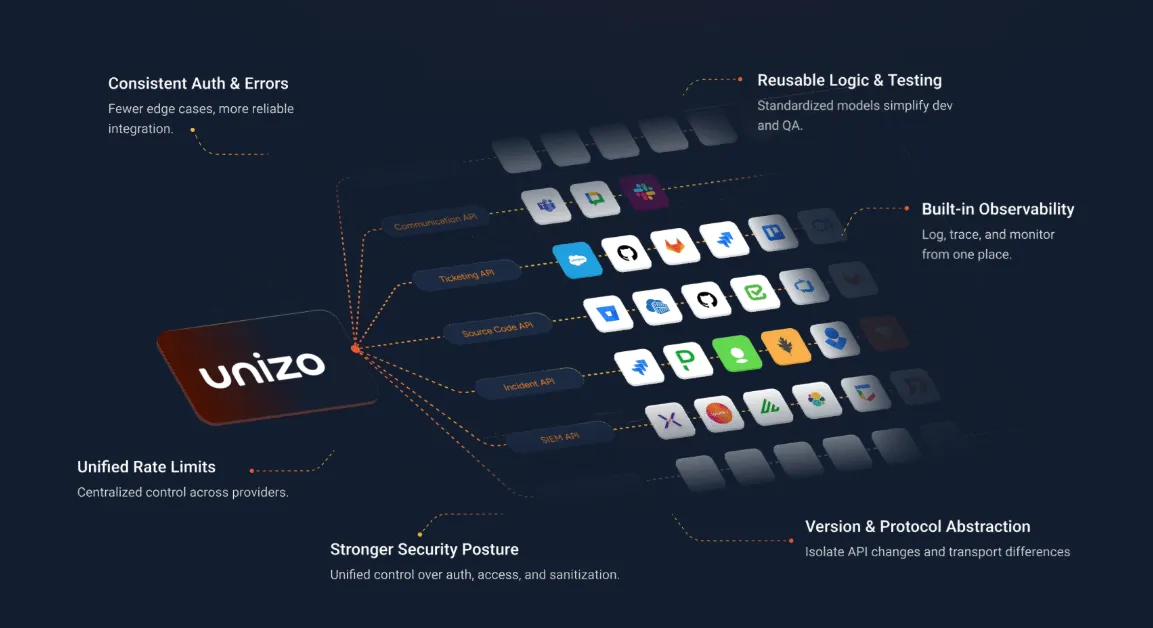
Single integration layer connects to all platforms in a category simultaneously.
Standardize Your Integration Flow
No more adapting to different API quirks, auth methods, or response formats.
Reduce Engineering Overhead
One integration surface minimizes custom logic and ongoing maintenance.
Power AI Workflows Reliably
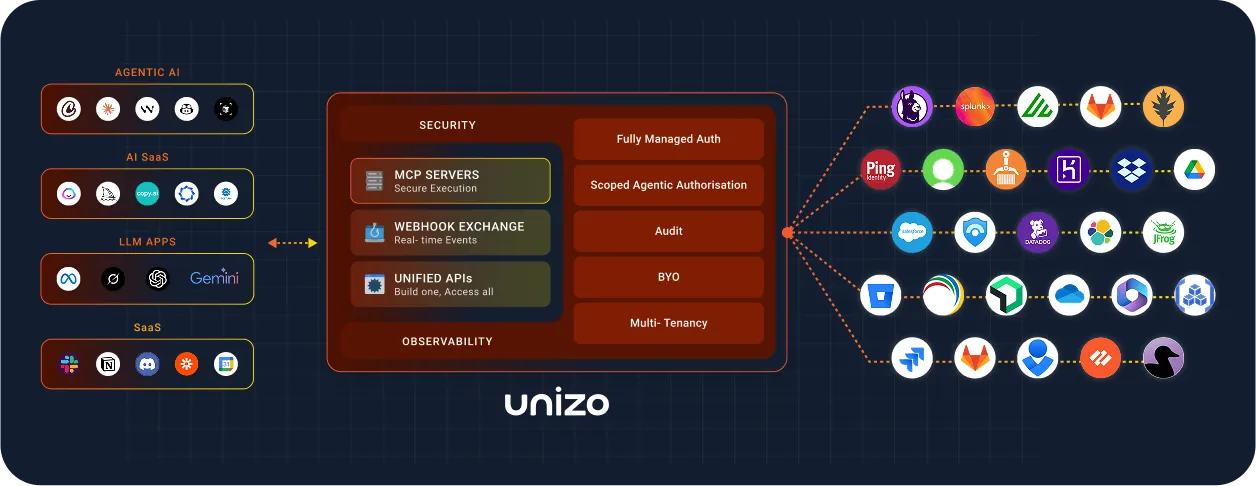
Consistent, structured data across tools for AI agents and automation.
The Unizo Integration Fabric
MCP Servers, Webhook Exchange, and Unified APIs working together to connect your applications to 150+ enterprise tools.
Why Point-to-Point Integrations Don't Scale
Modern enterprises use 130-180 SaaS tools. Traditional integration methods fail at this scale.
Every tool has its own auth, schema, and quirks to manage
3-year DIY integration cost
Engineering capacity lost to integration work
With Unified APIs: 30-40% engineering workload reduction. Convert variable integration costs into predictable, fixed expenses.
Four-Layer Architecture
From raw vendor APIs to clean, unified endpoints.
Connector Management
Handles OAuth, rate limits, pagination, API versioning, and error normalization.
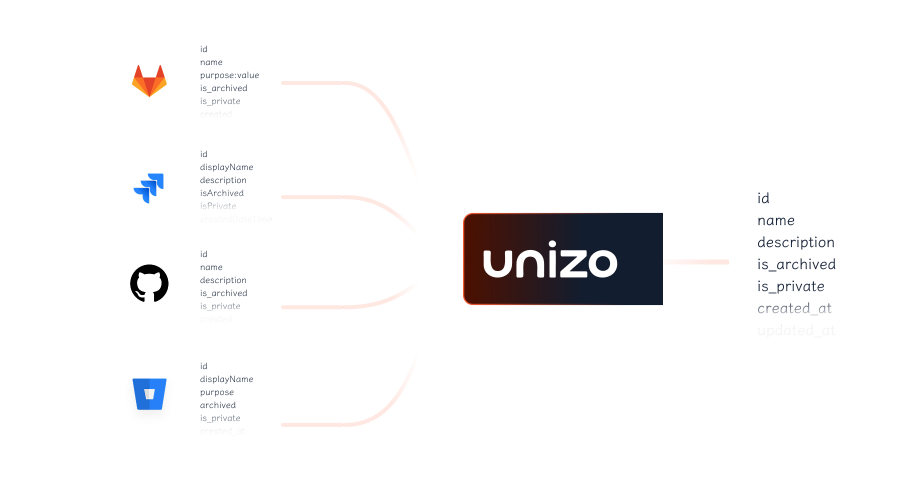
Semantic Normalization
Converts fragmented vendor schemas into unified canonical models.
Unified API Surface
Simple, consistent endpoints: GET /alerts, /tickets, /users, /assets.
Passthrough Layer
Preserves vendor-specific features when you need advanced functionality.
A Smarter Data Model for Complex Systems
At the core of each Unified API is a carefully designed normalized schema. These schemas abstract vendor differences and provide semantic consistency for AI agents and developer products.
- Vendor-Agnostic: Consistent structure regardless of source
- Canonical Models: Same fields and types across all providers
- No Custom Parsers: Skip writing vendor-specific transformations
- Developer-Friendly: Clean, predictable data you can build on